
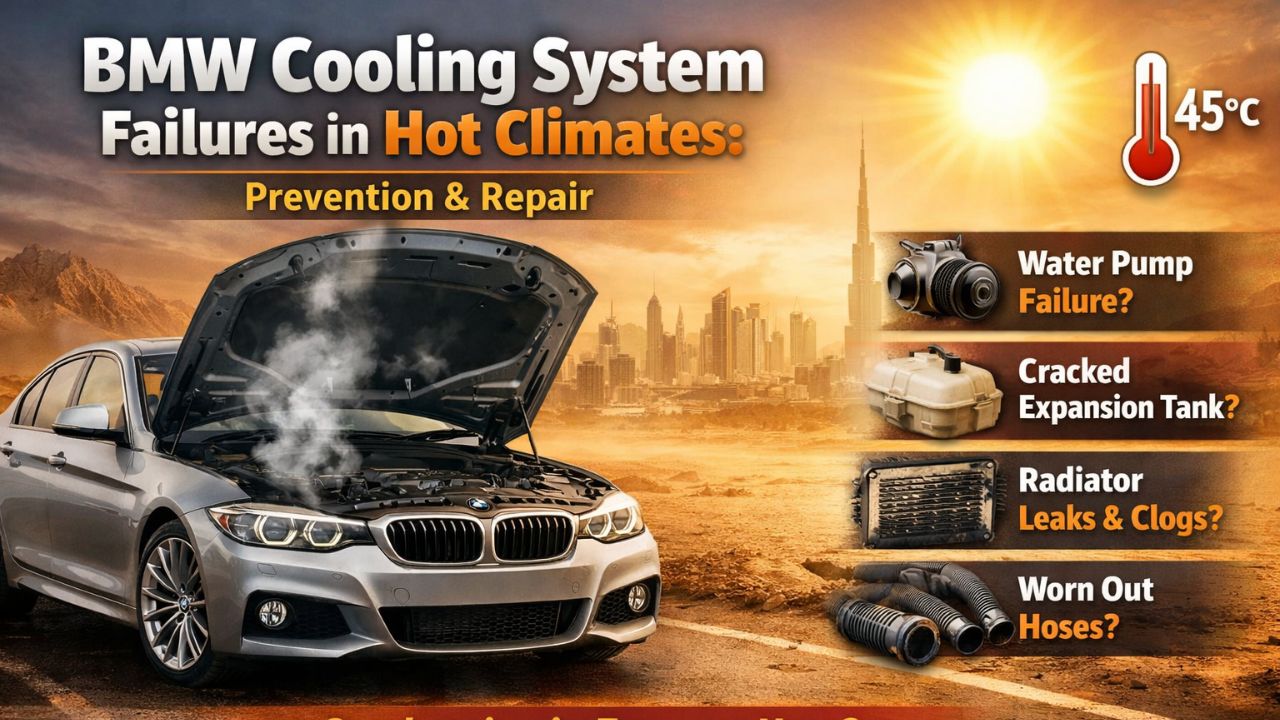
BMW vehicles are engineered for performance, precision, and driving comfort. However, when exposed to extreme temperatures—like those in Dubai and other hot climates—the cooling system becomes one of the most critical and vulnerable components.
Cooling system failures are among the most common issues BMW owners face in hot regions. If not addressed early, they can lead to severe engine damage and expensive repairs.
In this comprehensive guide, we’ll break down why BMW cooling systems fail in hot climates, how to prevent problems, and what to do when repairs are needed.
Why BMW Cooling Systems Struggle in Hot Climates
BMW engines are designed to run at higher operating temperatures compared to many other brands. While this improves efficiency and performance, it also means the cooling system is under constant stress. In places like Dubai, where temperatures can exceed 45°C, the cooling system is pushed to its limits daily.
Key Reasons for Failure:
- Extreme ambient heat increases engine temperature
- Heavy traffic causes prolonged idling
- Sand and dust clog radiators and airflow paths
- Frequent short trips prevent proper cooling cycles
- High-performance engines generate more heat
These conditions accelerate wear and tear on cooling system components, leading to frequent breakdowns.
Main Components of a BMW Cooling System
Understanding the system helps identify where problems usually occur.
Core Components:
- Radiator
- Water pump (often electric in modern BMWs)
- Thermostat
- Expansion tank
- Coolant hoses
- Cooling fan
- Temperature sensors
Each bmw part plays a vital role. Failure in any one component can compromise the entire system.
Common BMW Cooling System Failures
1. Water Pump Failure
Modern BMWs use electric water pumps, which are efficient but prone to sudden failure.
Symptoms:
- Engine overheating warning
- Reduced power mode
- Cooling fan running constantly
Why it happens:
Heat accelerates internal electronic wear, especially in extreme climates.
2. Radiator Leaks or Blockage
Radiators can become clogged with dust or develop leaks over time.
Symptoms:
- Coolant loss
- Engine running hotter than usual
- Visible coolant stains
Hot climate impact:
Dust buildup restricts airflow, reducing cooling efficiency.
3. Expansion Tank Cracks
BMW expansion tanks are typically made from plastic, which becomes brittle under constant heat exposure.
Symptoms:
- Coolant leaks
- Low coolant warnings
- Steam from engine bay
4. Thermostat Failure
A faulty thermostat can get stuck open or closed.
Symptoms:
- Overheating (if stuck closed)
- Engine not reaching optimal temperature (if stuck open)
5. Coolant Hose Wear
Rubber hoses degrade faster in high heat.
Symptoms:
- Coolant leaks
- Soft or swollen hoses
- Sudden bursts
6. Cooling Fan Issues
The cooling fan is essential, especially in stop-and-go traffic.
Symptoms:
- Overheating in traffic but normal on highways
- Loud fan noise or no fan operation
Signs Your BMW Cooling System Is Failing
Catching early warning signs can save your engine.
Watch for:
- Temperature gauge rising above normal
- Coolant warning light
- Sweet smell (coolant leak)
- Steam from hood
- Reduced engine performance
- Frequent need to top up coolant
If you notice any of these, immediate inspection is critical.
Why Cooling System Failures Are Serious
Ignoring cooling issues can lead to:
- Engine overheating
- Cylinder head damage
- Blown head gasket
- Complete engine failure
BMW engines are particularly sensitive to overheating, making early intervention essential.
Preventing BMW Cooling System Failures
Prevention is always cheaper than bmw repair—especially in hot climates.
1. Regular Cooling System Inspections
Have your cooling system checked every 10,000–15,000 km.
A proper inspection includes:
- Pressure testing
- Leak detection
- Coolant level and quality check
- Component wear analysis
2. Use the Correct Coolant
BMW requires specific coolant formulations.
Using the wrong coolant can:
- Cause corrosion
- Reduce cooling efficiency
- Damage internal components
Always use OEM-approved coolant.
3. Replace the Water Pump Preventively
In hot climates, it’s smart to replace the water pump before failure.
Recommended interval:
Every 80,000–100,000 km
4. Keep the Radiator Clean
Dust and sand are major issues in Dubai.
Regular cleaning ensures:
- Proper airflow
- Better heat dissipation
- Improved performance
5. Inspect Hoses and Expansion Tank
Check for:
- Cracks
- Bulging
- Weak spots
Replace aging plastic and rubber components proactively.
6. Monitor Driving Conditions
Avoid:
- Long idling periods
- Aggressive driving in extreme heat
- Ignoring warning lights
BMW Cooling System Repair: What to Expect
When a failure occurs, professional diagnosis is key.
Common Repairs:
- Water pump replacement
- Thermostat replacement
- Radiator repair or replacement
- Expansion tank replacement
- Hose replacement
- Coolant flush and refill
Importance of Professional Repair
BMW cooling systems are complex and electronically controlled.
A proper repair requires:
- Specialized diagnostic tools
- BMW-specific knowledge
- High-quality parts
DIY fixes often lead to bigger problems.
Cost vs Damage: Why Early Repair Matters
Delaying repairs can turn a minor issue into a major expense.
Example:
- Small coolant leak → inexpensive fix
- Ignored leak → engine overheating → full engine rebuild
The difference can be thousands of dirhams.
Tips for BMW Owners in Hot Climates
Here are practical habits to extend your cooling system life:
- Check coolant level monthly
- Park in shaded areas when possible
- Let the engine cool before aggressive driving
- Service your car regularly
- Never ignore warning lights
Why BMWs Need Extra Care in Dubai
Dubai’s environment is uniquely harsh:
- Extreme heat
- Heavy traffic
- Dust and sand exposure
These factors accelerate wear, making regular maintenance essential—not optional.
When Should You Visit a Specialist?
You should visit a BMW specialist immediately if:
- Your engine overheats even once
- Coolant level drops frequently
- Warning lights appear
- You notice leaks or steam
Delaying inspection can lead to severe damage.
FAQ: BMW Cooling System Failures
Because high temperatures increase stress on components like the water pump, radiator, and hoses. Dust and traffic conditions also reduce cooling efficiency.
Every 10,000–15,000 km, or sooner if you notice any warning signs.
No. Driving an overheating BMW can cause severe engine damage within minutes.
Water pump failure is one of the most common issues, especially in newer models with electric pumps.
Yes. Old coolant loses its effectiveness and can cause corrosion inside the system.
Absolutely. Low coolant leads to overheating, which can damage engine components.
With proper maintenance, components can last 80,000–120,000 km, but hot climates may shorten this lifespan.
It’s recommended to use OEM or high-quality parts to ensure reliability and performance.
Stop the car immediately, turn off the engine, and call for professional assistance.
Final Thoughts
BMW cooling system failures are common in hot climates—but they are also preventable. With proper maintenance, early detection, and expert repairs, you can avoid costly breakdowns and keep your BMW running smoothly even in extreme heat.
Need Expert BMW Cooling System Repair in Dubai?
If your BMW is showing signs of overheating or coolant issues, don’t wait.
At Kings Auto Garage, we specialize in BMW diagnostics, cooling system repairs, and preventive maintenance tailored for Dubai conditions.
✔ Advanced diagnostics
✔ Genuine & high-quality parts
✔ Experienced BMW specialists
✔ Fast and reliable service
Visit us today and keep your BMW running cool—even in the hottest weather.

 Oil Changes
 Suspension Repair
 Brakes Repair
 ECU/ECM Repairs
 AC Repair
 Battery Replacement
 Car Inspection